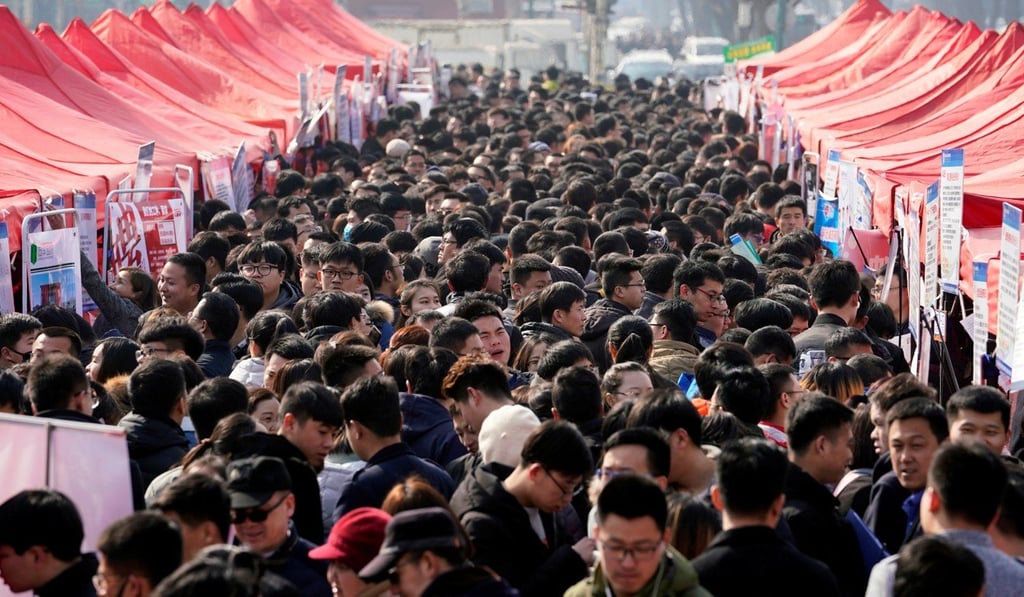
China’s crowded labour market is making life tough for foreign workers and new graduate ‘sea turtles’
- Overseas-trained talent known as ‘haigui’ are no longer seen as having an advantage over locally educated employees
- In the 40 years since opening up began, a total of 3.13 million sea turtles or 83.73 per cent of the Chinese students who graduated abroad have returned home

With the Chinese economy slowing, concern has increased among Chinese policymakers about the outlook for employment, since ensuring a sufficient number of new jobs is seen as a necessary ingredient in maintaining social stability. Employment was the top priority set by the the Politburo last July when it shifted its economic policy focus to stabilising growth, and this in turn lead the government to enact a series of policies to counter rising joblessness. This series explores the employment challenges faced by different segments of the Chinese economy, and this second instalment examines the issues faced by Chinese students returning from studying overseas, as well as foreign workers.
As the clock struck 11pm on a Wednesday night in late January, Peter Chen finally left his office in northwest Beijing. He had been researching the perception technology used in self-driving cars since 10am that morning.
Chen, a native of Yunnan province, is a recent returnee to China, having studied for bachelor’s and master’s degrees in computer science in Hong Kong.
Since returning to China, Chen’s career path has been a winding one.
A start-up venture he launched – a travel planning app – never got off the ground, so he spent a year teaching himself the engineering of autonomous vehicles, before landing a job at one of China’s internet giants.
But that has not been an easy road to travel either.